
Convierte tus en con .
Dome reúne tu biblioteca y tus relaciones en un workspace local-first. Many encuentra el material relevante, entiende a quién tienes delante y prepara el siguiente paso. Tú revisas y apruebas.
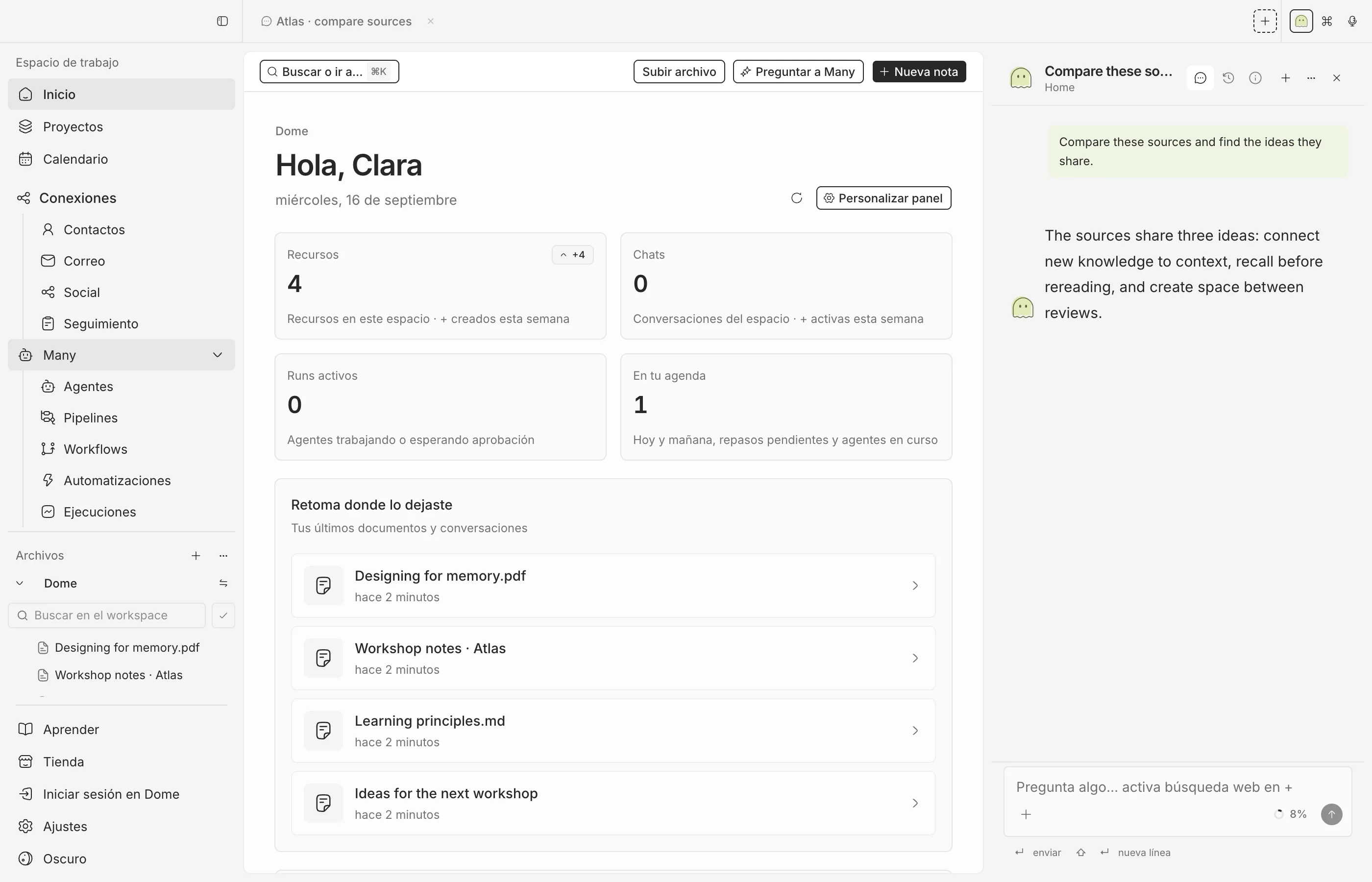
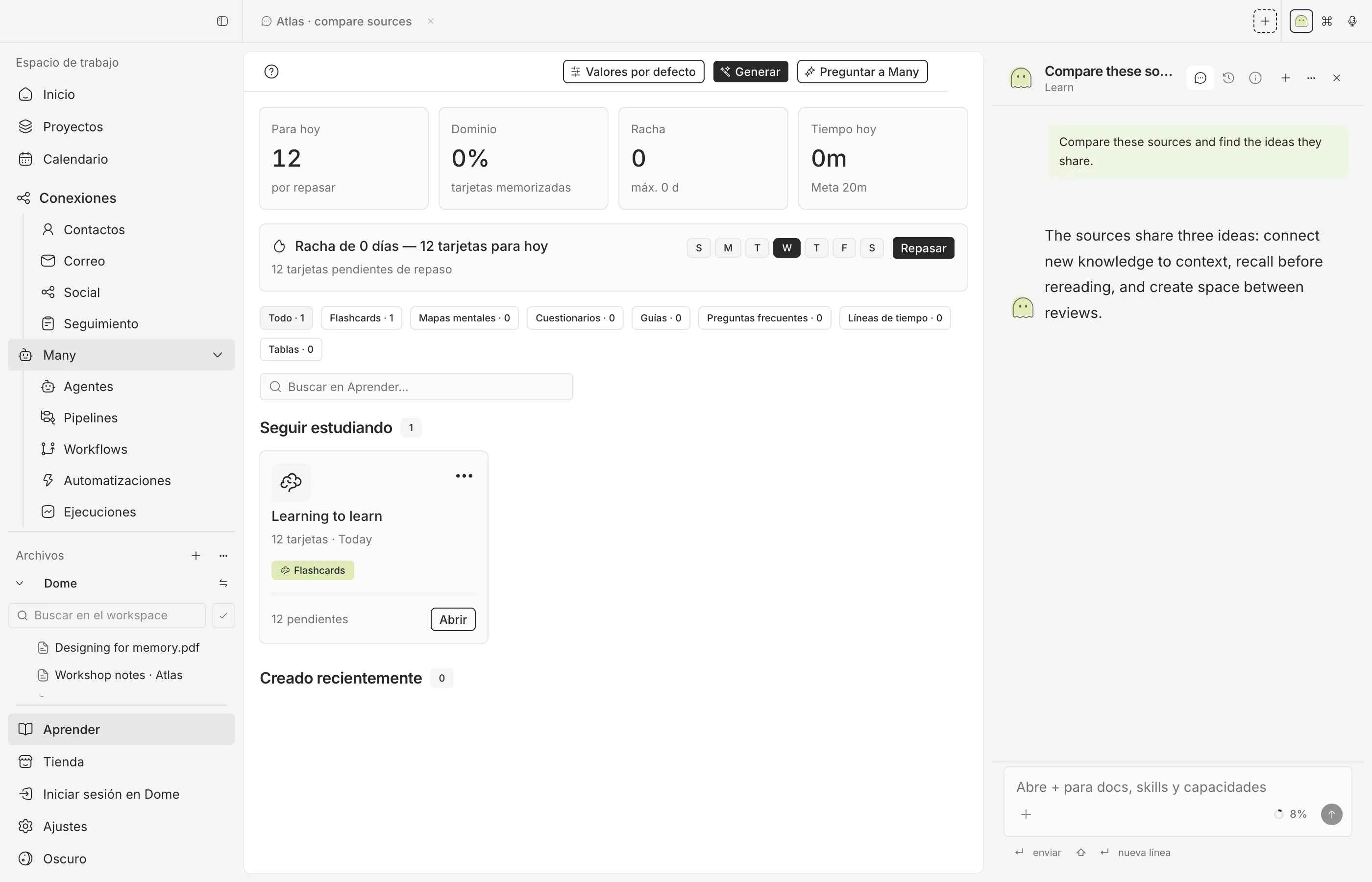
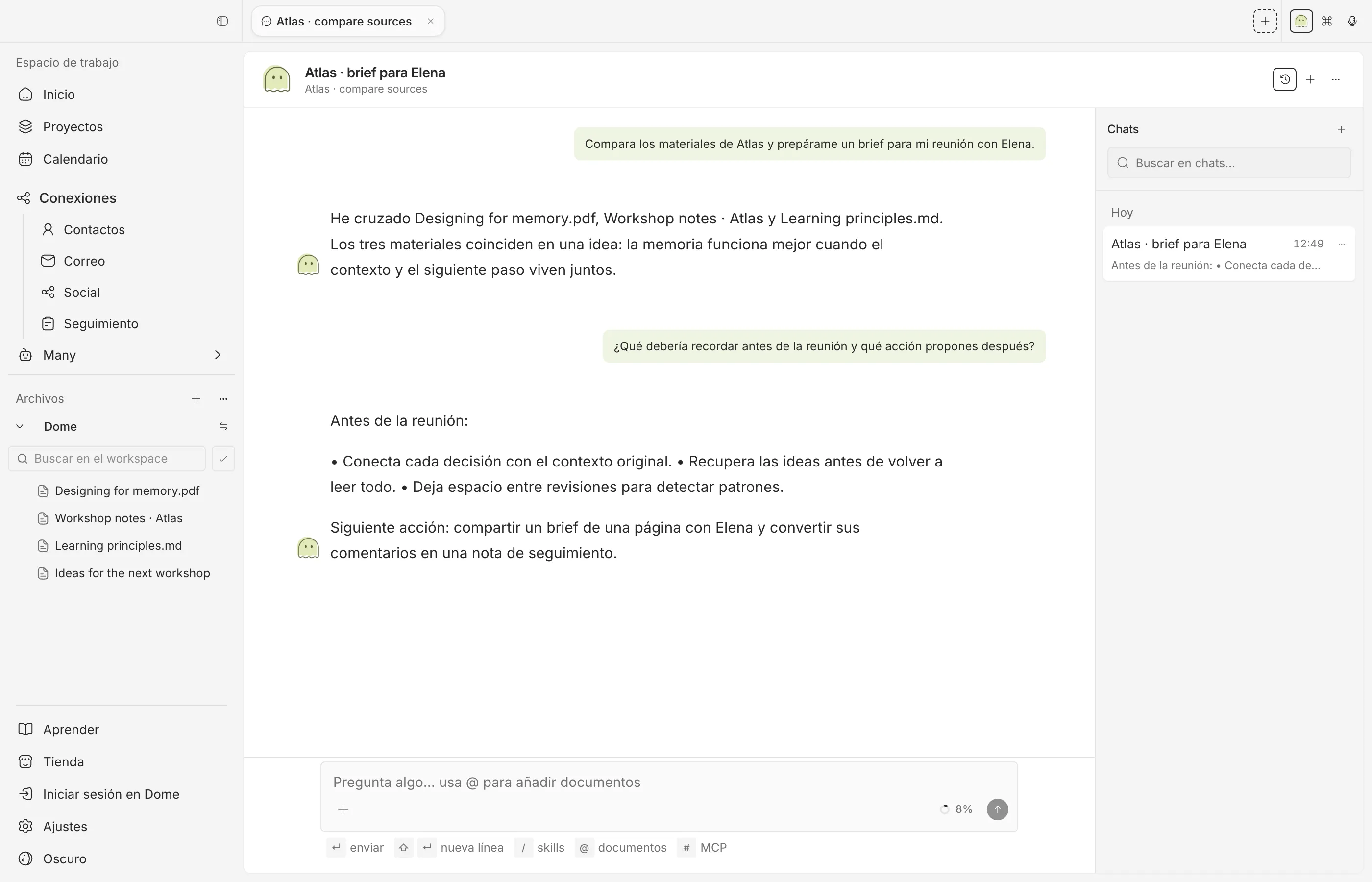
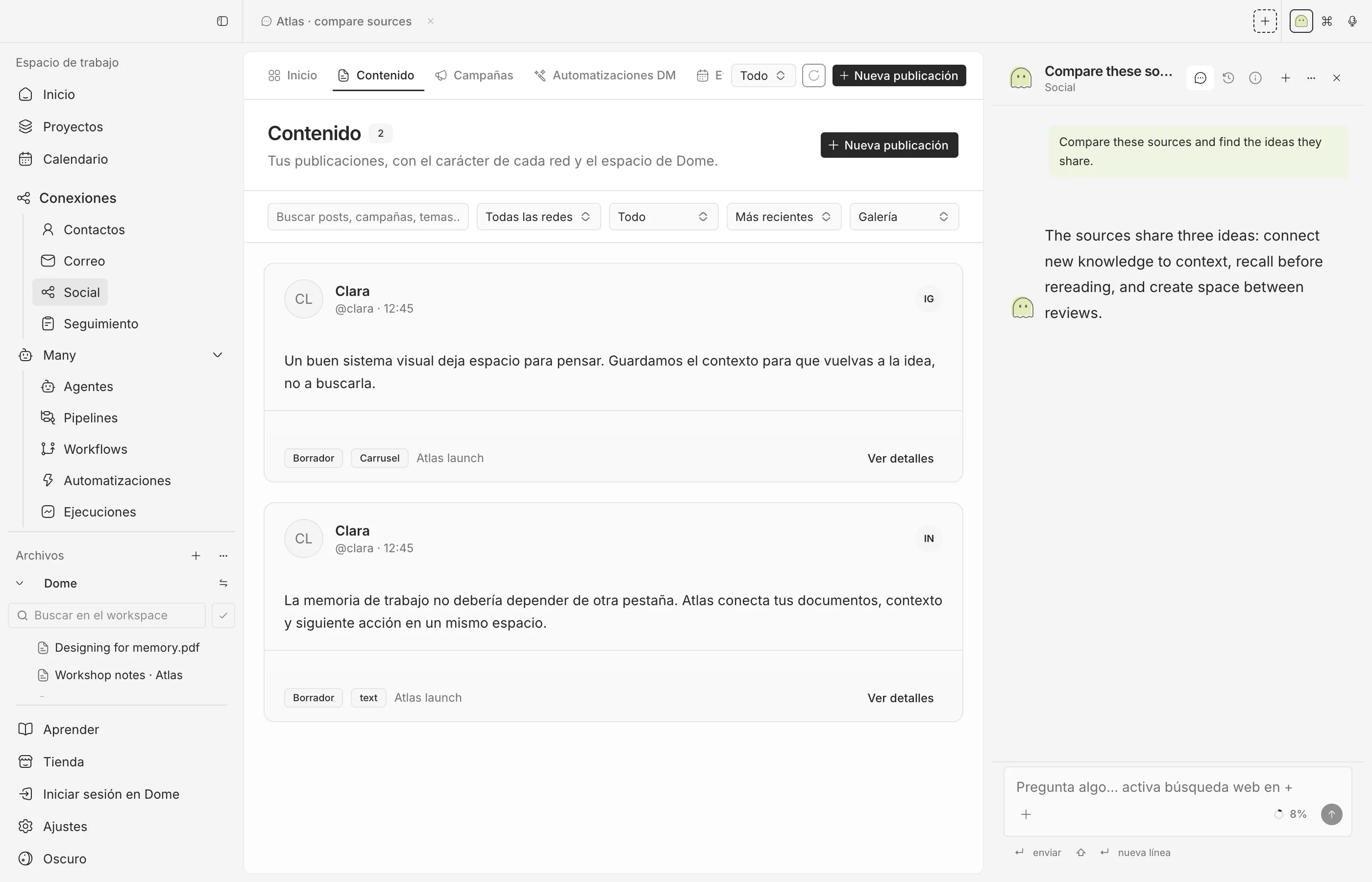
Biblioteca, aprendizaje e integraciones en una misma aplicación.
Usa Dome con tu biblioteca, tus personas y Many.
Sabe dónde está tu contexto.
Local-first significa que la biblioteca y las personas viven en tu ordenador por defecto. También significa explicarte cuándo un proveedor cloud recibe contenido.
Tus datos, tu disco.
La biblioteca se guarda en el almacenamiento de Dome. Many trabaja sobre ese material. La nube es opcional, y solo cuando tú la conectas.
Tú tienes el control.
El modelo, el envío y la nube no se activan solos. Cualquier salto fuera de tu disco espera una decisión tuya.
- Ollama en local
- Tus propias claves
- Cloud solo si lo conectas
- Correo bloqueado hasta aprobar
- Redes bloqueadas hasta aprobar
- Biblioteca en el disco
Documentación: Almacenamiento y permisos Privacidad
Más allá del escritorio
Tu Dome, también en el iPhone y en el navegador
La biblioteca y Many siguen en tu ordenador. Companion y la extensión solo te dan otra puerta para llegar a ellos.
-
Dome Companion para iPhone
Pregunta a Many por el informe de ayer o aprueba el correo que dejó preparado, desde la cola del café. Todo se ejecuta en tu Mac.
Ver cómo funciona → -
Extensión para Chrome, Edge y Safari
Guarda el artículo que estás leyendo con su resumen, cita un párrafo en una nota o convierte un perfil en contacto, sin copiar y pegar.
Ver cómo funciona →
Mira el flujo completo, de importar a aprobar.
Importa un recurso, abre una persona, deja que Many prepare el siguiente paso y aprueba antes de que nada salga de tu disco.
FAQs
Todo lo que necesitas saber sobre Dome. Si no encuentras lo que buscas, escribe a nuestro equipo .
General
¿Dome es una aplicación web?
No. El producto principal es una aplicación de escritorio para macOS, Windows y Linux.
¿Dome es local?
Es local-first. La biblioteca y las personas se guardan localmente por defecto, pero si conectas un proveedor cloud, el contenido enviado a ese proveedor sigue su política.
¿Necesito una cuenta?
La prueba local no debería depender de una cuenta cloud. La cuenta de Dome se usa para funciones del Provider cuando estén disponibles.
Uso
¿Puedo usar ChatGPT, Claude u Ollama?
Puedes configurar los proveedores compatibles que exponga la versión publicada de Dome.
¿Puedo usar Dome para trabajar y aprender?
Sí. La biblioteca, Many, el aprendizaje y las integraciones forman parte de la misma aplicación. Consulta Funciones para ver cada flujo de trabajo.
Biblioteca
¿Qué puedo importar?
Notas, PDFs, vídeo, audio, páginas y URLs, según lo que la versión publicada soporte de forma estable.
Convierte el próximo documento en un siguiente paso.
Descarga Dome, importa un recurso y comprueba si Many entiende el contexto.